• Home
  • About
    • About Alethea
    • Qualifications and Associations
    • What Can I Help With?
  • Services
    • Consult Structure & Pricing
    • Meal Plans
  • book consult
  • Shop
    • Meal Plans
    • Workshops
    • Recipe Books
  • Blog
    • Nutrition
    • Sports Nutrition
    • Lifestyle
    • Health
    • Recipes
  • Recipes
    • Breakfast
    • Main Meals
    • Salads
    • Drinks
    • Sweets
  • Contact
  • Cart
    • Facebook
    • Instagram

Alethea Mills Nutrition- Gold Coast Nutritionist

BHSc Nutritional and Dietetic Medicine

7 Benefits of Creatine Supplementation for Lean Muscle & Perimenopause

May 1, 2023 by aletheam Leave a Comment

Pin

Creatine is a supplement I talk about often in consults with my perimenopause clients and clients wishing to gain lean mass and currently undertake resistance training. I realised I haven’t included a social post, which is not helpful for those of you reading here and not yet working with me directly!

What is it?

It’s an amino acid made up of glycine, methionine, and arginine. which you can gain from diet (meat & fish) or via supplementation. Increasing creatine intake increases phosphocreatine levels. Why is this important? When we exercise, we use ATP, when this runs out the body builds its own ATP, which we do this better at rest. We use phosphocreatine to build ATP, so if you have additional stores, you can make ATP a little faster so you can train harder i.e. few more reps/lift a bit heavier resulting in increased lean muscle mass.

  • Did you know that creatine can help preserve muscle mass during perimenopause? As women age and hormones change, women tend to lose muscle mass and gaining muscle mass can take a little more effort than in younger years. This can affect mobility and overall health.  
  • How much creatine should you take? The recommended dosage is 3-5 grams per day. However, it’s important to consult with a healthcare professional before starting any new supplement to ensure dosing is correct and it is right for you. Many people do a loading dose of 20g over a period of 4-5 days; however, creatine has a cumulative effect so you can avoid some of the side effects such as bloating with higher doses and take around 5g daily and you will reach the same saturation point but in a slightly longer period. It is only by a few weeks to do it this way, which can then avoid the side effects of the loading dose.
  • Creatine doesn’t do the work for you. You still need to engage in regular resistance training exercises that challenge your muscles. Lift heavy!
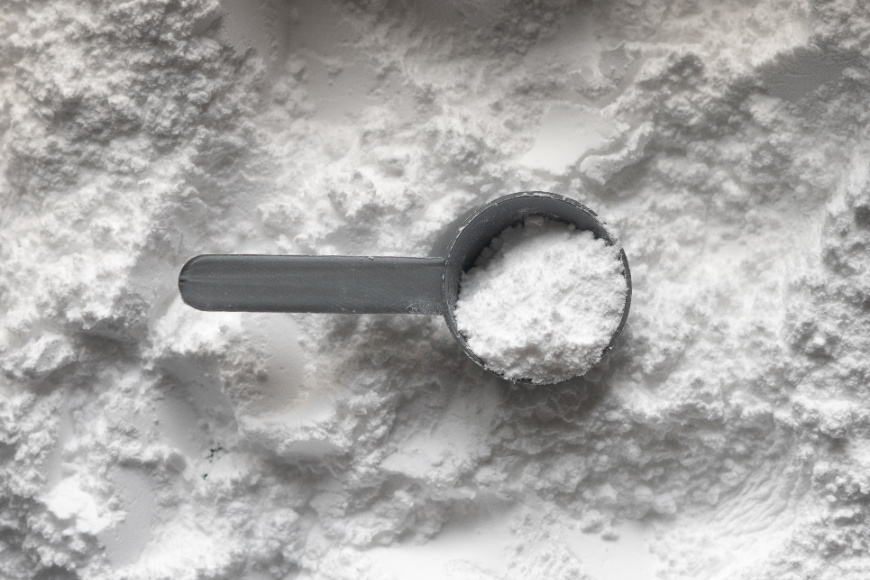
  • Not all creatine is created equal. Look for creatine monohydrate, as it’s the most researched, inexpensive, and effective form of creatine. It is a highly studied supplement and is one of the safest to take at the recommended doses.
  • In addition to its muscle-building benefits, creatine has also been shown to improve cognitive function and overall health. Elderly people and vegetarians can see some great benefits with creatine use.
  • Creatine helps with energy as it can increase the amount of ATP (your body’s energy source) in the cells. This then helps with being able to lift heavier (average of 20%) and more reps.
  • You may notice an initial increase in weight due to intracellular water increase (water inside the cells) this is not fat gain. The water retention is seen with the higher loading dose and more of a grey area when taken over a longer period.

References

PMID: 35984306 PMID: 30762623 PMID: 14636102 PMID: 3557850 PMID: 33800439 10.1186/s12970-021-00412-w
You might also enjoy...

Tart Cherry Juice: The Natural Sleep and Recovery Booster for Active Women and Perimenopause
Is your Microbiome affecting your Athletic Performance?
Simple (but important) Things to Know about Electrolytes
Pin

Filed Under: Exercise, Health, Lifestyle, Uncategorized Tagged With: creatine, perimenopause, resistance training

Previous Post Red Witch Immune Tea
Next Post Is Breakfast Really the Superstar?

Leave a Reply Cancel reply

Your email address will not be published. Required fields are marked *

Recipe Rating


Cart

Essential Runners Tips

Turn your run into fun! Do bloating, diarrhoea or food sensitivities affect your runs?  Download the FREE guide on how to run and have a happy gut.

Runners Tips | Nutritionists Guide to Runners Gut

Plant Food Tracker for a Rockin’ Gut Microbiome

Plant food tracker - Alethea Mills Nutrition

HELLO!

HELLO!

I'm Alethea, a Gold Coast based Clinical Nutritionist with a Bachelor's Degree of Health Science in Nutritional and Dietetic Medicine. I'm passionate about helping people rediscover the spark of vitality deep within.

Nutrition News

Register your details to receive interesting health and nutrition news! Only goodness will be delivered to your inbox and I will never share your email.

Recent Posts

  • RED-S and Low Energy Availability: the commonly overlooked syndrome in sport.
  • Tart Cherry Juice: The Natural Sleep and Recovery Booster for Active Women and Perimenopause
  • Gut Friendly Bliss Balls
  • Maximise Your Race: The DIY Sweat Test for Athletes
  • Be a Marathon Rockstar: Fuel Your Success from Start to Finish

GET SOCIAL

  • Facebook
  • Instagram

BLOGS

  • Breakfast
  • Brunch
  • Dinner
  • Drinks
  • Exercise
  • Health
  • Lifestyle
  • Lunch
  • Main Meals
  • Nutrition
  • Recipes
  • Salads
  • Sports Nutrition
  • Sweets
  • Uncategorized

LATEST POSTS

RED-S and Low Energy Availability: the commonly overlooked syndrome in sport.

Tart Cherry Juice: The Natural Sleep and Recovery Booster for Active Women and Perimenopause

Gut Friendly Bliss Balls

Maximise Your Race: The DIY Sweat Test for Athletes

aletheamills_nutrition

🌱| ℕ𝕦𝕥𝕣𝕚𝕥𝕚𝕠𝕟𝕚𝕤𝕥 (𝔹ℍ𝕊𝕔ℕ𝕦𝕥𝕄𝕖𝕕)
➡️ Helping active people optimise energy, digestion & performance with nutrition & functional testing.

Hallelujah ✨ Hallelujah ✨
Antibiotics are sometimes necessary (I’ve just b Antibiotics are sometimes necessary (I’ve just been on a course after emergency dental surgery 😩), but they don’t act in isolation.
They reduce microbial diversity, disrupt beneficial species, and can impact things like short-chain fatty acid production which plays a big role in gut barrier/lining, immune function and inflammation regulation.

This is why some common symptoms like diarrhoea, bloating, or changes in digestion occur while taking them and can still happen when they are finished. Even without symptoms there can be changes in the microbiome.

I always say it is an absolutely necessity, do not take antibiotics if not 100% necessary and always finish the course when you do have them. 

What I recommend to support you gut:

💊 Saccharomyces boulardii to reduce antibiotic-associated diarrhoea + ensure probiotics are taken at least 2hrs away from antibiotics.
🦠 Feed the beneficial microbes with a fibre like PHGG + polyphenol-rich foods
🫐Use targeted multi-strain probiotics during/after antibiotic use + increasing plant diversity
🥑Include nutrients to support the gut lining (glutamine, zinc carnosine, vitamins A + D, anti-inflammatory support)

It doesn’t need to be excessive but offering your gut no support while using antibiotics will lead to longer term gut issues.The microbiome is resilient, but it does need support.

If your gut tends to struggle after antibiotics, or symptoms linger longer than they should, that’s usually a sign you need a more personalised approach.

Feel free to reach out if you want support with that 💚
Snippet of a beautiful weekend away to celebrate a Snippet of a beautiful weekend away to celebrate a birthday of a good friend. I am so glad we crossed paths all those years ago  when studying @anappleaday_nutrition 🤍

Three nights in Hobart with good friends, food, wine and a cheeky 15k run. Cannot recommend Tolpuddle and Mona enough 🙌🏼

@andrew_raines_  @wellnourished @anappleaday_nutrition a wonderful time 🙏🏼🙏🏼
If you are training regularly and your body still If you are training regularly and your body still feels flat, tired, or not quite right, underfueling needs to be on your radar. 

RED-S can affect recovery, hormones, bone health, performance and mood, and it is more common in active people than many realise.

This is not just about eating more. It is about making sure your intake matches your training and your physiology.

The full blog breaks down the signs, the red flags 🚩that I look for in a consult and the starting points.

▶️ Send this post to your training buddies.

👀 Read the full blog via the link in bio
Follow on Instagram

SIGN UP FOR NEWS

Register your details to receive interesting health and nutrition news delivered to your inbox!

  • Facebook
  • Instagram

Code of Conduct

Privacy Policy

Contact

Terms & Conditions

COPYRIGHT © Alethea Mills 2019. This website was brought to life by Little Palm Creative Co. · DMCA.com Protection Status